Vincent CC CHENG
Paradoxical response has been well described in non-HIV infected patients receiving anti-tuberculous therapy for Mycobacterium tuberculosis. Such phenomenon has also been reported in patients during the reversal of immunosuppressive processes such as withdrawal of corticosteroid, recovery of the neutrophil count from chemotherapy, and engraftment after bone marrow transplantation. In the era of HIV infection, the development of highly active antiretroviral therapy (HAART) has markedly improved the immune defects in patients infected with HIV, as evidenced by an increase in CD4 cell counts and a reduction of HIV viral load. HAART decreases the incidence of opportunistic infections by restoration of protective pathogen-specific immune responses. However, a paradoxical deterioration of opportunistic infections was increasingly observed in patients receiving HAART. This phenomenon is known as IRD, namely immune reconstitution disease, immunorestitution disease, or immune restoration disease.1,2 In the context of HIV, IRD can be defined as an acute symptomatic or paradoxical deterioration of a (presumably) preexisting infection which is temporally related to the recovery of CD4 cell count as a result of HAART.2 The preexisting microbial infection could be either asymptomatic or mildly symptomatic.
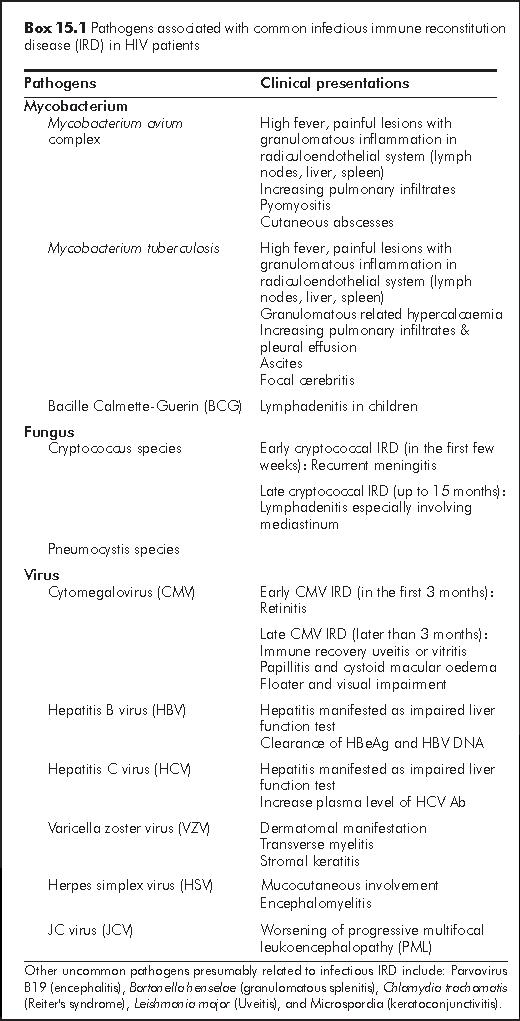
It is estimated that between 15% and 25% of HIV patients experience IRD, with most cases occurring in the first 3 months of therapy.3 The majority of patients are associated with infections due to mycobacteria (MAC or M. tuberculosis), Cryptococcus neoformans, Pneumocystis jiroveci, and viruses (cytomegalovirus, hepatitis B, hepatitis C, varicella zoster virus) (Box 15.1). The clinical presentation of opportunistic infection during IRD is characterised by inflammatory and typical host responses to preexisting microbes, instead of a high microbial tissue burden and systemic dissemination as in the phase of immunosuppression.2 It is well illustrated in the setting of M. tuberculosis infection and CMV retinitis. Primary or reactivation of M. tuberculosis infection in immunosuppressed hosts may be rapidly progressive with persistent fever, wasting and extrapulmonary spread with high mycobacterial load. Chest radiography may appear normal or show miliary lesions. Skin test with purified protein derivative (PPD) is always negative. During immunorestitution, severe inflammatory response to both pulmonary and extrapulmonary foci loaded with acid fast bacilli result in the worsening of pulmonary lesions, hypertrophy and hyperplasia of the reticuloendothelial tissues of liver, spleen and lymph node. Histological evidence of granulomatous inflammation would appear, and the PPD skin test would turn positive. In AIDS patients with a CD4+ lymphocyte count of less than 200/μL, CMV retinitis is characterised by non-inflammatory necrotising lesions even in the presence of extensive retinal involvement, as distinct from the fundoscopic changes of inflammatory retinitis, vitritis, papillitis and macular oedema after treatment with HAART.
The exact pathogenesis of IRD is poorly understood. The immunopathogensis appears to be related to the interaction between HAART associated improvement of host immune response and the presence of preexisting microbial antigen. The increase in CD4 cells after initiation of HAART accounts for the immune recovery. Activated memory cells (CD4+CD45RO+) increase in the early incremental phase as a result of cellular redistribution, which is followed by a de novo proliferation of naïve activated CD4 cells (CD4+CD45RA+CD62L+) after several months of treatment.4 The occurrence of IRD depends on the tissue burden of preexisting microbes, virulence of the organism and the exactness or restriction of the antigen-specific immune system. Three overlapping scenarios could be envisaged:
Firstly, patients with a high microbial load or infected with more virulent microbes may die of overwhelming sepsis even before the recovery of immune system by HAART. This is exemplified by the absence of pyogenic bacterial infections reported in IRD.
Secondly, patients with a low microbial burden and an orderly recovery of the immune system may only have subclinical IRD so that the diagnosis may be missed.
Thus, only the third group of patients, those with an appropriately significant microbial burden and relative overshooting of immune recovery may exhibit clinically significant systemic or local inflammatory response during IRD. Whether the inappropriate immune recovery is related to the exaggerated production of proinflammatory cytokines or a lack of counter-regulatory cytokines remains to be determined.
IRD occurs more frequently in patients with advanced HIV infection as evidenced by a lower CD4 cell and higher HIV RNA level count prior to starting HAART.3,5 It is an expected finding as a lower CD4 cell count and higher HIV RNA level may increase the likelihood of an occult or disseminated infection. During the reversal of immunosuppression by HAART, a reconstituted immune system can react to the preexisting microbial antigen. Interestingly, a rapid decline in HIV RNA level but not a rise in CD4 cell count during the first 3 months of HAART is reported to be associated with the development of IRD. In patients with known opportunistic infection, the initiation of HAART in a close proximity to the antimicrobial therapy for opportunistic infection appeared to increase the risk of occurrence of IRD.5
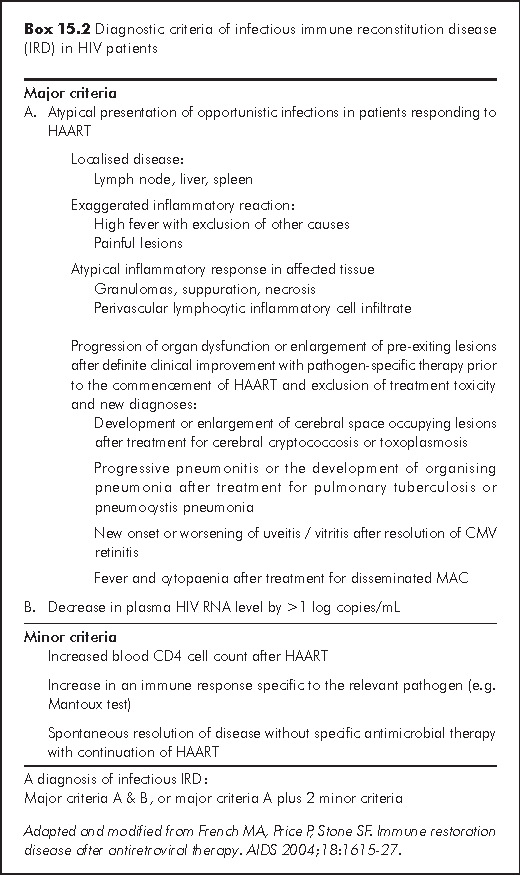
Since there is a lack of clinical or laboratory tests that are specific for IRD, a diagnosis of IRD is never simple or straightforward. In general, the occurrence of clinical symptoms is temporally related to a decrease in HIV RNA level and an increase in CD4 cell count from baseline. Diagnostic criteria have been proposed by different groups,1,6 an example which is at Box 15.2. Normally, however, IRD is a diagnosis by exclusion after considering adequacy of antimicrobial therapy, development of drug resistance, superinfection by other organisms, or development of non-infectious complications.
The clinical management of IRD remains a controversial issue. In general, there are two patterns of presentation in infectious IRD. The early IRD manifests in the first 3 months of HAART as a result of an immune reaction towards viable opportunistic infections, which are usually presented as asymptomatic infection. In contrast, the late IRD occurs months to years after the initiation of HAART due to an immune response against the antigen of the dead microbes.
To prevent the onset of early IRD, the HAART can be postponed until the microbial load has been reduced by effective antimicrobial therapy. However, the potential benefit of reducing the incidence of IRD by delaying HAART may be outweighed by the risk of further AIDS related opportunistic infection. The balance between the optimal time to initiate HAART in patients with opportunistic infection remains to be investigated.
Therapeutic intervention of IRD is not well established. Patients with non-severe forms of IRD such as recurrence of fever, enlargement of superficial lymph nodes, and increased pulmonary infiltrates or pleural effusion do not require specific treatment. Patients should be reassured. HAART and antimicrobial agents can normally be continued. However, severe clinical deterioration may occasionally occur in patients with worsening of cerebral or mediastinal disease which may cause compression of the vital structure, compromising the organ functions and respiratory function. The uses of immunomodulators such as steroids and non-steroidal anti-inflammatory agents along with surgical interventions should be considered. The dose and duration of therapy should be individualised. The ideal situation in the treatment of IRD is to attain the exact control of the overwhelming immune system by immunomodulation. For example, intravenous immunoglobulin infusion combined with ganciclovir has been proven to reduce the mortality of post-engraftment CMV pneumonitis in BMT recipients. Although the role of interleukins and cytokines in IRD is still uncertain, immunotherapy should be the future direction of treatment in IRD.
The prognosis of IRD in HIV patients is generally good. In fact, a self-limited inflammatory response usually predicts a favorable long-term outcome. Patients with IRD appear to have a more successful immune reconstitution, HIV RNA suppression, and a trend toward increased survival.5
French MA, Price P, Stone SF. Immune restoration disease after antiretroviral therapy. AIDS 2004;18:1615-27.
Cheng VC, Yuen KY, Chan WM, Wong SS, Ma ES, Chan RM. Immunorestitution disease involving the innate and adaptive response. Clin Infect Dis 2000;30:882-92.
Jevtovic DJ, Salemovic D, Ranin J, Pesic I, Zerjav S, Djurkovic-Djakovic O. The prevalence and risk of immune restoration disease in HIV-infected patients treated with highly active antiretroviral therapy. HIV Med 2005;6:140-3.
Autran B, Carcelain G, Li TS, et al. Positive effects of combined antiretroviral therapy on CD4+ T cell homeostasis and function in advanced HIV disease. Science 1997;277:112-6.
Shelburne SA, Visnegarwala F, Darcourt J, et al. Incidence and risk factors for immune reconstitution inflammatory syndrome during highly active antiretroviral therapy. AIDS 2005;19:399-406.
Shelburne SA, Montes M, Hamill RJ. Immune reconstitution inflammatory syndrome: more answers, more questions. J Antimicrob Chemother 2006;57:167-70.